

 Do it once, do it right!
Quick FAQs
-
Will polished concrete effect my in slab heating.
No, polished concrete is the ultimate finish for in slab heating.
More info -
What are the most popular finishes chosen from your warehouse?
The most popular finish is generally Full Exposure Gloss Polished Concrete.
More info -
Do you have any tips about seeding a slab with pieces of glass and/or bottles?
Smooth objects and/or objects that sit on the top of a slab might become dislodged from a polished floor leaving a hole.
More info -
Can concrete hearths or steps be polished?
Hearths and steps can be polished. Steps will need to be stripped, hand trowelled and filled on the day of pour.
More info -
What happens if someone spills petrol or turps on a polished concrete floor?
Wipe as soon as possible with a damp cloth.
-
Can the new polished floor get damaged after its polished during the rest of the build?
On completion of machine polishing the floors we recommend to cover with Ramboard™ Floor Protection until the end of the build.
More info -
We have a garage with a maroon type colour concrete floor. It has a few paint stains etc on it. I was thinking of giving it a good sanding, with some type of machine no doubt & then painting some kind of clear sealer on it. Can any concrete floor be sande
Yes, any concrete floor can be ground and sealed or mechanically polished.
More info -
Can concrete flooring be put over ceramic tiles in kitchen and bathrooms and how do you clean it?
If you have an existing concrete slab you can certainly remove the existing floor tiles and then Mechanically Polish the concrete slab.
More info
Case Studies
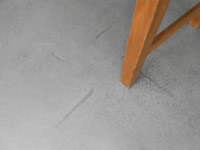
Helicopter and Screed Marks
Helicopter and Screed Marks - Nil or Light Exposure